What can You(you) do(do)?
A few days ago, through a friend-of-a-friend, I met an older, retired French guy who used to live in Senegal thirty-some years ago. Inevitably during our conversation, the topic of my Senegal-parrot came up...and it turns out that le monsieur used to have one as well. (In fact, the bird is still alive, being taken care of by a friend back in France while he is on an extended trip...) Monsieur got the parrot when he was living in West Africa, and when he returned to France, the tame bird simply flew along in the plane in his carry-on bag!
From Monsieur, I learned that in Wolof (one of the native Senegalese languages), the word for the local parrots is "youyou." That term has been officially etymologically embraced by les français. So, in good French I can say...J'ai un youyou qui s'appelle Tango.
And he has been toilette-trained; who knew you could 'potty-train' a parrot?!
Here's how his previous owner had trained the bird to poop before coming out of the cage:
She would sit in front of the cage before taking him out, then ask him 'want out?' while lifting the door hinge...and then before she would take Tango out, she would repeatedly and animatedly say 'poop!' until the tell-tail (ahem) plop would occur, at which time she would immediately (and animatedly) say 'good-bird!' while taking him out of the cage. Pavlovian conditioning, eh?
So, we 'inherited' this little ritual. But...I didn't want the bird to begin saying 'poop' after hearing me repeat it all the time every day when I wanted to take him out...
So, I thought maybe I could try 'shifting' the verbal cue to something less, well, fecal...
I thought I might try saying "Poop-hurry up!" with the eventual idea of dropping the 'poop' and just having 'hurry-up' be his order...
It seems to be working.
I can't believe I'm writing a blog about bird crap...
The other little bird in our life--Paquito the Peruvian parrotlet--said his first words this past Sunday while on my wife's lap: "Salut Paquito!" Yes, kind of silly that he says hello to himself, (in French, no less) but logical since we always say hello to him including his name...tiny tiny voice, but it's a trip to hear a bird that's less than five inches in length talking to you!
And Tango, in addition to saying "ouiiiiiiii!" and "hello" is learning to imitate the little bird's diminutive tweets...
When my wife and I eat together at the table in the morning, we hear bird beaks busily breakfasting around us--seed-cracking in surround-sound.
Back to Senegal, now...
a while ago I read an awesome travelogue about West Africa, "Angry Wind; through Muslim Black Africa by truck, bus, boat and camel" by Jeffrey Tayler.
I just got to thinking about how Africa is just not talked about enough in American media...so much ignorance...
And as my wife and I become more aware of our south-of-Seattle-surroundings, we are noting a strong African presence: the bright billowing burka-like robes of the Somali women walking along the traffic in Tukwila...the West-African women who work in the hair-braiding salons in Renton and Federal Way...the Senegalese who often sells sunglasses on downtown corners...the Ethiopian restaurants frequented by the taxi-drivers...
Interesting to look at numbers as well...For example--French-speaking countries. If you total up the population of the 19 sub-Saharan nations where French is an official language (including the island of Madagascar), you get the staggering figure of 214 million. Compare that to the population of France: 60 million; way more people speak French OUTside of France than within...
In case you're wondering which African countries are francophone, here they are in no particular order: Senegal, Guinea, Mauritania, Mali, Burkina Faso, Niger, Chad, Côte d'Ivoire, Togo, Benin, Cameroon, Gabon, Congo (Rep.), Congo (Dem. Rep.; formerly known as Zaïre), Central African Republic, Rwanda, Burundi, Madagascar, and (the 'funnest' to say for English-speakers:) Djibouti.
And while on the topic of foreign countries and immigrants, I have to mention my newest neighborhood culinary find: at the Filipino produce stand down the hill, on Tuesdays and Fridays the local Ukranian bakery delivers fresh loaves composed of layers of brioche-like pastry rolled around honeyed and crushed poppy-seeds...(The muy auténtico taco-truck in front is also worthy of a stop.)
To go back to the list of African countries...it's interesting to read through a list of just some of the languages spoken in those places: Mandinka, Jula, Pulaar, Wolof, Maninkakan, Arabic, Fulani, Saninka, Bambara, Bamanankan, Móoré, Hausa, Djerma, Zarma, Sara, Dioula, Baoulé, Ewe, Mina, Kaloye, Dagomba, Fon, Yoruba, Beti, Fang, Myene, Nzebi, Bapounou, Bandjabi, Lingala, Monokutuba, Kikongo, Kingswana, Tshiluba, Luba-kasai, Kituba, Sango, Kinyarwanda, Swahili, Kirundi, Rundi, Malagasi, Somali, Berber, Afar...makes sense that even decades after the end of colonization, le français continues to be the lingua franca, eh?
Tuesday, October 24, 2006


Wednesday, October 11, 2006
'Are there trees in (which?) Korea?'
I admit, I find entertainment value in the occasional ignorant question.
Those who know me know I am a map nerd.
I am a fan of the corny bumper sticker that reads:
"without geography, we're nowhere!"
I cannot fathom not knowing, or not wanting to know, where I am and where I might go.
I am a geographile. (I know that's not the real word...someone help me out here...)
One of my favorite questions I was asked when I was younger--in middle school--was this:
"Are there trees in Korea?"
A fellow student learned that I was neither Chinese nor Japanese, but (half) Korean.
And so he asked...I can only hope I controlled my eye-rolling reflex before saying, 'why, yes, there are.'
And then someone else asked me (this was in high school) once:
"Do they have seasons in Korea?"
Wow.
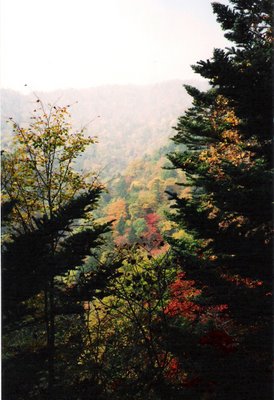
So here's some photographic evidence--autumn in the mountains of Korea, the envy of a New England fall photo spread:
(another, ignorant question, having to do with my non-Korean other-half heritage--I was once asked, when I was in college, by a fellow university student--egad!--"Really, they speak English in Canada? I thought they all spoke French..." I was kind of impressed actually that the person knew that French was spoken as a native language up north...but really, they didn't know English was the language of 3 out of 4 Canadians?)
And there's this:
"So, you were born in North Korea or South Korea?"
Well, I guess that's a fair question...
...but really, almost no one gets out of North Korea...99.999 % of Koreans abroad are from the Southern half of the peninsula.
And that peninsula sure is in the news these days...
A while back when I finally got around to scanning some photos, I found a photo (from 1993) of North Korea. Back then, one of the only spots in South Korea where you could safely look into the North was about an hour to the NW of Seoul, along the estuary of the Han River at the "Ae-gi-bong" lookout: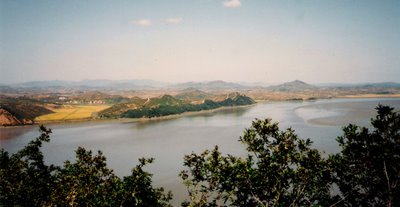
I admit, I find entertainment value in the occasional ignorant question.
Those who know me know I am a map nerd.
I am a fan of the corny bumper sticker that reads:
"without geography, we're nowhere!"
I cannot fathom not knowing, or not wanting to know, where I am and where I might go.
I am a geographile. (I know that's not the real word...someone help me out here...)
One of my favorite questions I was asked when I was younger--in middle school--was this:
"Are there trees in Korea?"
A fellow student learned that I was neither Chinese nor Japanese, but (half) Korean.
And so he asked...I can only hope I controlled my eye-rolling reflex before saying, 'why, yes, there are.'
And then someone else asked me (this was in high school) once:
"Do they have seasons in Korea?"
Wow.
So here's some photographic evidence--autumn in the mountains of Korea, the envy of a New England fall photo spread:
(another, ignorant question, having to do with my non-Korean other-half heritage--I was once asked, when I was in college, by a fellow university student--egad!--"Really, they speak English in Canada? I thought they all spoke French..." I was kind of impressed actually that the person knew that French was spoken as a native language up north...but really, they didn't know English was the language of 3 out of 4 Canadians?)
And there's this:
"So, you were born in North Korea or South Korea?"
Well, I guess that's a fair question...
...but really, almost no one gets out of North Korea...99.999 % of Koreans abroad are from the Southern half of the peninsula.
And that peninsula sure is in the news these days...
A while back when I finally got around to scanning some photos, I found a photo (from 1993) of North Korea. Back then, one of the only spots in South Korea where you could safely look into the North was about an hour to the NW of Seoul, along the estuary of the Han River at the "Ae-gi-bong" lookout:
It was taken in October--the rice paddies in the 'propaganda villages' are golden...Note the completely deforested mountains, apart from the slopes right along the river in the middle...To the left of those green lower slopes, there's one of those non-populated propaganda villages, built to make it look like all is well in the uptopic North, unlike the evil capitalistic hell of the South...Loudspeakers blast music across the river, to convince gawking day-trippers from Seoul that they live in a (pardon the pun) soul-less society and that Kim Il Sung and Kim Jong Il merit worship..
A couple of weeks later, some relatives took us to visit the eastern mountains of Korea (where the above fall foliage photo was taken: Odae-san national park). Nearby is a little road-side monument marking the pre-Korean-war division of the peninsula. After 3 years and over a million deaths, the country remained divided in 1953, and the DMZ-border hardly moved...
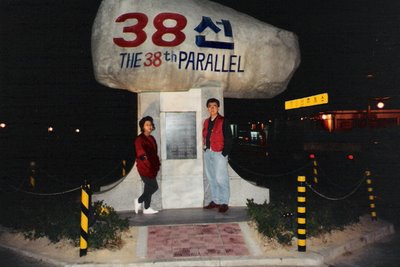
(ahh...the days before contact lenses, in the large-glass-framed 90's...fresh-out-of-high-school geekdom...)
I thought a glimpse into North Korea might be of interest.
And so--yes, there ARE trees in Korea...just not in the North...
Tuesday, October 10, 2006
...and today's newspaper-gleaned factoid is...
...that Nicaragua is hoping to trademark a new national drink.
Mexico has margaritas.
France has champagne and pastis.
Japan has saki.
Cuba has cuba libres and mojitos.
Peru has its pisco sours...
And now, Nicaragua, trying to play catch-up in the tourist-world,
and also to cash in on its really good rum,
wants a typical liquid refreshment of its own.
So, a contest was held,
which you can read about in this article in today's International Herald Tribune (click on this).
Here's an excerpt:
After sipping numerous offerings, the judges have opted for a fruity concoction that they called el macuá, after a tropical bird found in this part of the world. The drink is one part white rum, one part guava juice, with a half-portion of lemon juice and some sugar and ice.
...that Nicaragua is hoping to trademark a new national drink.
Mexico has margaritas.
France has champagne and pastis.
Japan has saki.
Cuba has cuba libres and mojitos.
Peru has its pisco sours...
And now, Nicaragua, trying to play catch-up in the tourist-world,
and also to cash in on its really good rum,
wants a typical liquid refreshment of its own.
So, a contest was held,
which you can read about in this article in today's International Herald Tribune (click on this).
Here's an excerpt:
After sipping numerous offerings, the judges have opted for a fruity concoction that they called el macuá, after a tropical bird found in this part of the world. The drink is one part white rum, one part guava juice, with a half-portion of lemon juice and some sugar and ice.
It's nice to read about something less threatening than North Korean nuclear tests and school-shootings, no?
I don't recall ever seeing a 'macua' bird, (macaw) though...at least not in the wild. They are extinct in most of Western Nicaragua, where most Nicaraguans live. Their nests are hunted down due to the supposed semi-spiritual powers that can be obtained from its extracts...Hmm...
Monday, October 09, 2006
Adoption numéro deux...
Today we brought home a seven-month-old-baby from West Africa.
We figured Paquito, our five-and-a-half-month-old Peruvian,
could use some company during the day when we're not at home.
So we adopted Tango, a Senegal parrot.
Paquito, our parrotlet, who is sitting on my shoulder as I type this, doesn't seem to mind the avian addition to the apartment. Of course, he hasn't yet seen the 'other' bird directly yet; Tango's in semi-quarantine in the other room for a week...
I guess this means my wife and I are (weird?) bird people now, no?
While living in Nicaragua, we saw so many domesticated birds: the requisite chickens (for eating and fighting)...turkeys...even toucans sometimes! (They like to eat papaya.) Mostly, though, we got acquainted with little green conure parrots, such as "Pinky" who spent some of his time in an recycled fan-shell in a friend's backyard:
 (Desgraciadamente, Pinky didn't live too long after this photo...a gato got to him...)
After making friends with a few of these feathered creatures, we decided that when we got back up to Gringolandia, we would get a bird. So, in August, a couple of weeks after moving into our apartment, we went to the parrot store just down the hill from us...and we brought home Paquito:
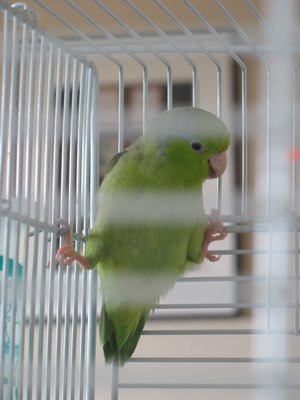 He is a funny little bird--a quiet little acrobat, just under five inches long. He is still discovering his pea-sized voice. Speaking of peas, he likes to eat them--just the soft inside part; the outside shell gets tossed out of his dish.
I'd mentioned to one of my classes that I have a bird...
...and then last week one of my students came up to me, saying that a family friend was needing to find a 'good home to adopt' their Senegal parrot that they can no longer care for. I thought--aww, the student thinks that I'm 'worthy,' that my wife and I would be a 'good bird home.' Then I thought, "hey--what's wrong with this bird so that they want to get rid of it? Is it a screamer? a half-nude feather-plucker?"
So I called the family...drove by on the way home from work last Friday...learned he hasn't been abused and doesn't have weird ticks...took Sara to meet 'Tango' on Saturday...then we returned this morning to see him one last time and then bring him home.
And here he is: After having gotten used to Paquito's size, Tango seemed like a pterodactyl (nine inches long!)at first...but he's adjusting well. He can look out the window at the starlings and jays that visit our balcony. We took careful notes from his first owner about what/ when to feed him. (Apples and scrambled eggs in the evening; he likes a red Fruit-loop now and then, but just flings around banana pieces...) His nascent vocabulary already includes 'hello' and 'pretty'...and I hope to teach him some vocabulaire français by next spring so I can take him into class and have fun with the students...
Sara and I are excited to have a full-fledged PARROT now...don't worry, we're not going to neglect 'the little guy'...
But I should put Paquito away now. (He's left quite a few 'gifts' on my shoulders in the past few minutes...one cannot have a phobia of feces and have a pet bird! But having a towel on one's shoulders helps.)
The whistling from the other room indicates that I need to go spend some out-of-cage-time with le perroquet africain...
Who trains who, eh?
Today we brought home a seven-month-old-baby from West Africa.
We figured Paquito, our five-and-a-half-month-old Peruvian,
could use some company during the day when we're not at home.
So we adopted Tango, a Senegal parrot.
Paquito, our parrotlet, who is sitting on my shoulder as I type this, doesn't seem to mind the avian addition to the apartment. Of course, he hasn't yet seen the 'other' bird directly yet; Tango's in semi-quarantine in the other room for a week...
I guess this means my wife and I are (weird?) bird people now, no?
While living in Nicaragua, we saw so many domesticated birds: the requisite chickens (for eating and fighting)...turkeys...even toucans sometimes! (They like to eat papaya.) Mostly, though, we got acquainted with little green conure parrots, such as "Pinky" who spent some of his time in an recycled fan-shell in a friend's backyard:
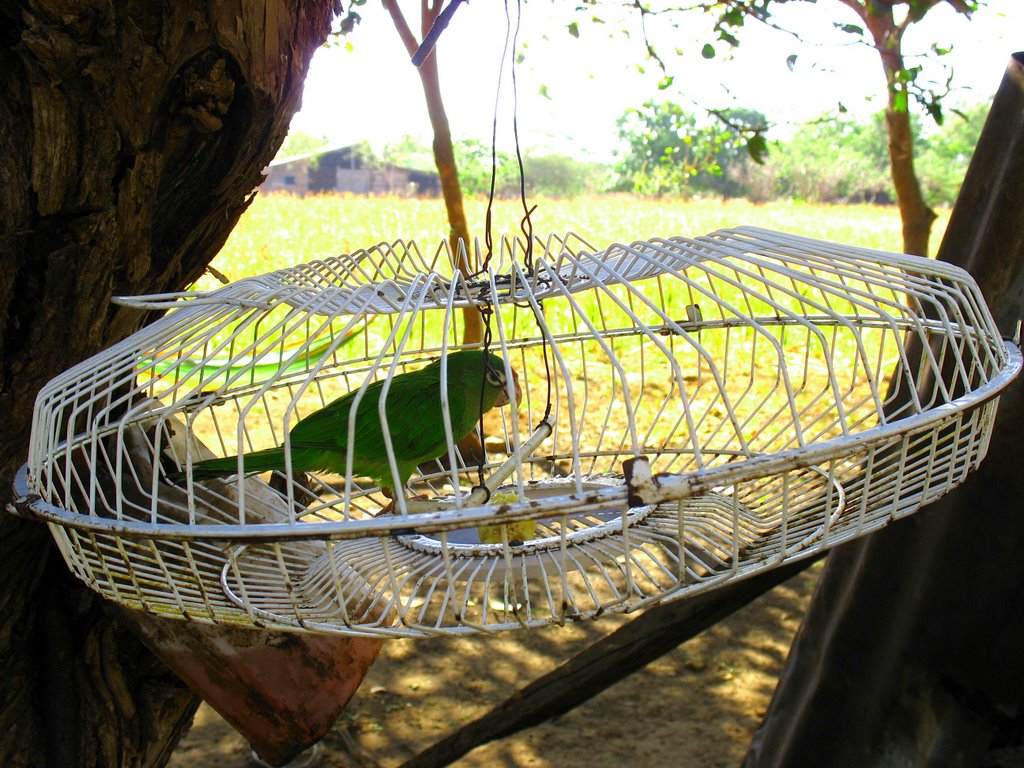 (Desgraciadamente, Pinky didn't live too long after this photo...a gato got to him...)
After making friends with a few of these feathered creatures, we decided that when we got back up to Gringolandia, we would get a bird. So, in August, a couple of weeks after moving into our apartment, we went to the parrot store just down the hill from us...and we brought home Paquito:
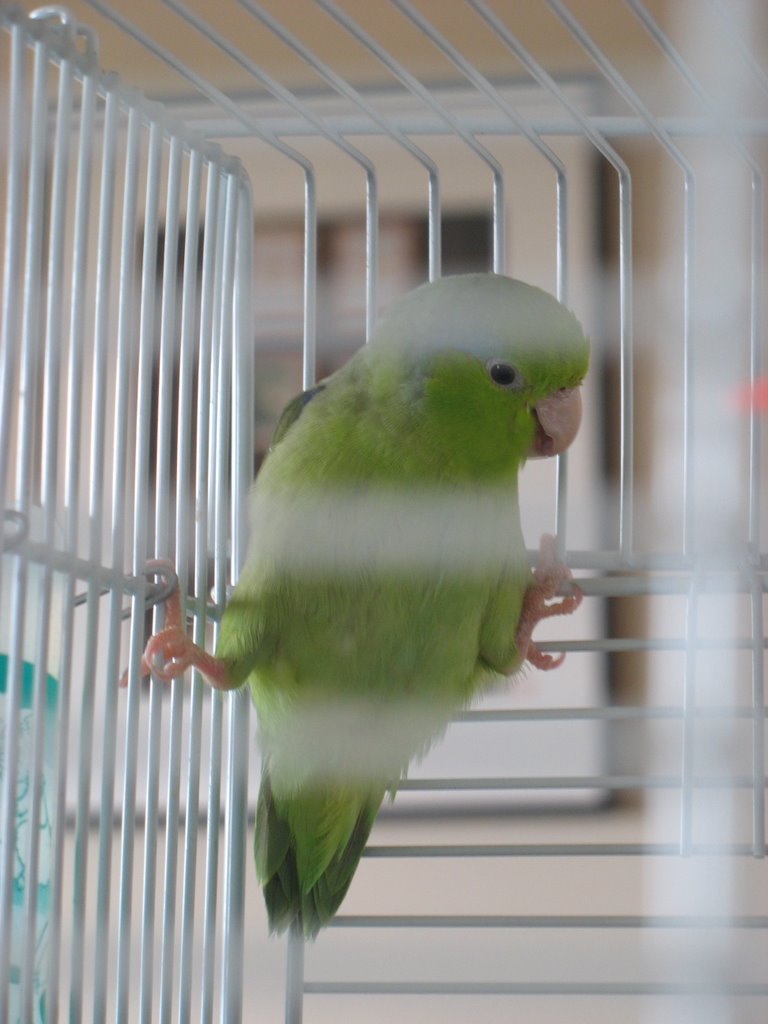 He is a funny little bird--a quiet little acrobat, just under five inches long. He is still discovering his pea-sized voice. Speaking of peas, he likes to eat them--just the soft inside part; the outside shell gets tossed out of his dish.
I'd mentioned to one of my classes that I have a bird...
...and then last week one of my students came up to me, saying that a family friend was needing to find a 'good home to adopt' their Senegal parrot that they can no longer care for. I thought--aww, the student thinks that I'm 'worthy,' that my wife and I would be a 'good bird home.' Then I thought, "hey--what's wrong with this bird so that they want to get rid of it? Is it a screamer? a half-nude feather-plucker?"
So I called the family...drove by on the way home from work last Friday...learned he hasn't been abused and doesn't have weird ticks...took Sara to meet 'Tango' on Saturday...then we returned this morning to see him one last time and then bring him home.
And here he is:
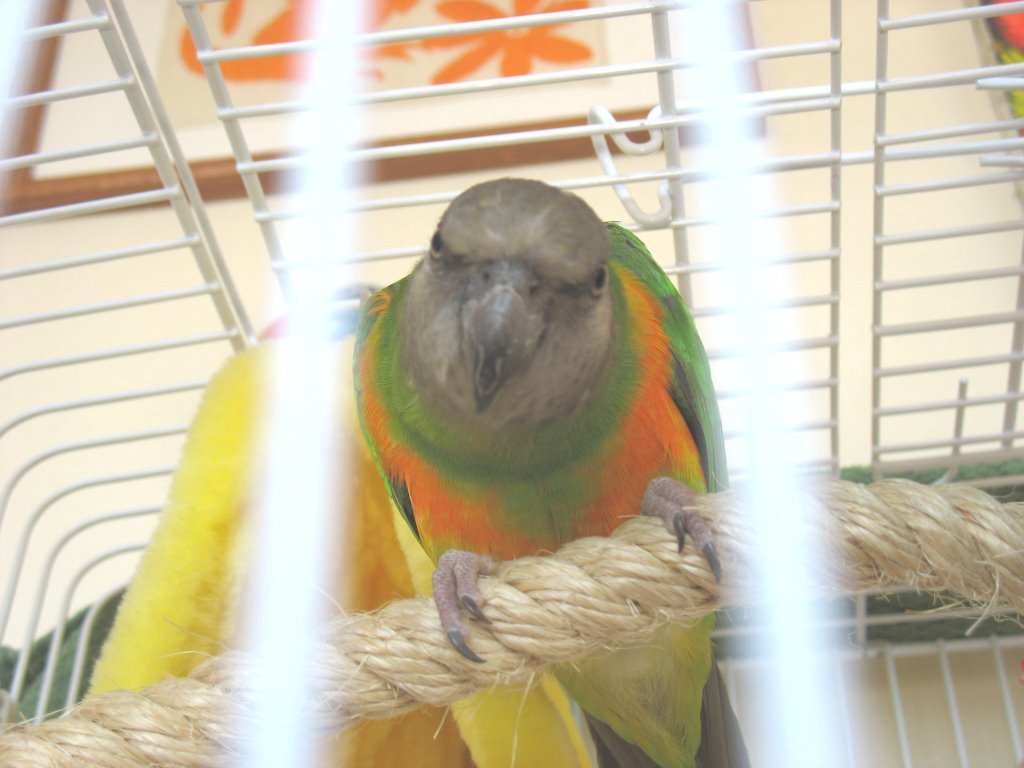 After having gotten used to Paquito's size, Tango seemed like a pterodactyl (nine inches long!)at first...but he's adjusting well. He can look out the window at the starlings and jays that visit our balcony. We took careful notes from his first owner about what/ when to feed him. (Apples and scrambled eggs in the evening; he likes a red Fruit-loop now and then, but just flings around banana pieces...) His nascent vocabulary already includes 'hello' and 'pretty'...and I hope to teach him some vocabulaire français by next spring so I can take him into class and have fun with the students...
Sara and I are excited to have a full-fledged PARROT now...don't worry, we're not going to neglect 'the little guy'...
But I should put Paquito away now. (He's left quite a few 'gifts' on my shoulders in the past few minutes...one cannot have a phobia of feces and have a pet bird! But having a towel on one's shoulders helps.)
The whistling from the other room indicates that I need to go spend some out-of-cage-time with le perroquet africain...
Who trains who, eh?
Saturday, September 30, 2006
An evening in "Hweh-deu-roul-weh-eeh..."
...or "Federal Way" as most people know the suburban city, located halfway between Seattle and Tacoma.
"Hweh-deu-roul-weh-eeh" is an appropximate rendering in English of how Korean-speakers, in the Korean alphabet, write out "Federal Way," since there is no "F"-sound in their Han-gul script.
So I'm almost over my cold, and as a get-well field trip, my wife and I decided to go out for Korean food tonight. (The chili and garlic quotient in that cuisine practically make it medicinal.) The centers of Korean commerce in the Puget Sound area are in three places: the Shoreline-Edmonds corridor north of Seattle, the Lakewood area just south of Tacoma, and just twenty minutes from us in Federal Way (incidentally, my wife's home town). Scattered among Wal-Mart, Target, and Barnes and Noble are a healthy concentration of Korean restaurants, stores and salons.
So we had our 'fix' of garlicky redness.
We ordered one of our favorites: 'soon-too-boo,' which is a spicy stew of soft, fresh tofu with mushrooms, chili, garlic, and a choice of other items which might include seafood or meat and vegetables. It often is served boiling hot in a stone bowl, into which you break an egg, which cooks as you stir it around with a garnishing of toasted seaweed...Serious comfort food and it'll kick a cold right out of you. (This photo is not from the restaurant, but from my mom's house, when she made some for us when we visited her a few months ago....gives you an idea of the UN-subtle coloring of Korean cuisine...)
It's hard to spell out Korean food in English and not have it sound like a scary disease when you read it outloud..
Perhaps the phonetic unfriendliness of the menu is one reason why Korean food hasn't become as popular as Chinese and Thai food...Some examples of the scary spelling of other Korean staples are:
"jab-chae"
"bool-koki"
"bi-bim-bob"
"kal-bee"
"kkak-doo-gie"
"ddok"
"o-jing-o"
"kimchee" (probably the most familiar word)
So, yeah, if you don't know what those things mean, I can perfectly understand why you would be afraid to order anything!
But other Asian restaurants also have their fair share of delightful spellings...
A couple of my favorites are: "crab delighted"--yeah, sounds like fun!
and: "wanton soup"--watch your morals as you slurp there...
And that brings me to one of the joys in life for my wife and me: Engrish.
'Engrish' is that special brand of fractured English that appears in all manner of printed form in East Asia, on public signs, t-shirts, advertisements, and readily available on our side of the Pacific--on packages of exported food products.
So after dinner, we drove across (yes--drove across; one cannot walk across the street in suburbia, alas...) the road to a huge new grocery store: "H-mart." The business, housed in what was formerly a mainstream American mega-grocery-store, is an Asian-foodie's dream: cheap, exotic produce, fresh live fish, and yes--full of Engrish-labeled products. I love Federal Way's international strip-mall-ambiance: I can go to Barnes and Noble and then go to a supermarket that makes me feel as if I were in downtown Seoul. (As for the name "Federal Way," well...I don't love that name so much--who came up with that name for a town? I mean, for a road maybe, but for an incorporated city? come on--where was the imagination? Well, if you say it the Korean way--hwehdeuroulwehee--it sounds kind of exotic, eh?)
Among our purchases were a couple of candy items. I just had to scan them and so I submit them to you now:
These chocolates are from Japan:
"Couple Chocolate"...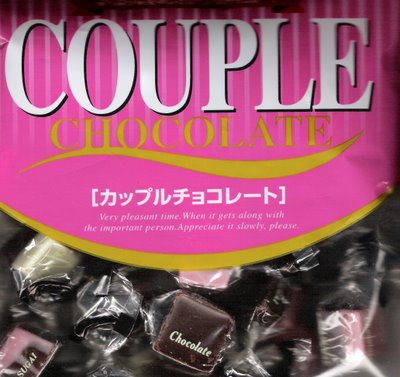
In case you are having a hard time reading the small print, I'll write it out here:
"Very pleasant time.
When it gets along with the
important person.
Appreciate it slowly, please."
I guess the candy manuracturers wanted to give some relationship advice...
And now, from Korea, are some walnut candies:
"A Walnut Village"
Again, I'll retype the small print:
"So long as the world exists,
the most beautiful and most
profound taste we can
experience is the
joeun candy."
Yeah...it takes a village to understand
that, eh?
( I just found out that it's possible on this website
to click on a picture to see a bigger version,
so go ahead if you want to read the small print...)
A couple more things that caught our eye tonight we didn't buy, so I couldn't scan them...
but I have to mention them:
"HotMate" spicy rice crackers...(only for married folks?)
"SexyMild" mauve-colored cosmetic face powder...(no, wouldn't want to be 'wild,' just 'mild'...)
In today's increasingly globalized world, why learn Spanish, French, or Mandarin?
Everyone should speak Engrish; the world would be a much punnier prace...
...or "Federal Way" as most people know the suburban city, located halfway between Seattle and Tacoma.
"Hweh-deu-roul-weh-eeh" is an appropximate rendering in English of how Korean-speakers, in the Korean alphabet, write out "Federal Way," since there is no "F"-sound in their Han-gul script.
So I'm almost over my cold, and as a get-well field trip, my wife and I decided to go out for Korean food tonight. (The chili and garlic quotient in that cuisine practically make it medicinal.) The centers of Korean commerce in the Puget Sound area are in three places: the Shoreline-Edmonds corridor north of Seattle, the Lakewood area just south of Tacoma, and just twenty minutes from us in Federal Way (incidentally, my wife's home town). Scattered among Wal-Mart, Target, and Barnes and Noble are a healthy concentration of Korean restaurants, stores and salons.
So we had our 'fix' of garlicky redness.
We ordered one of our favorites: 'soon-too-boo,' which is a spicy stew of soft, fresh tofu with mushrooms, chili, garlic, and a choice of other items which might include seafood or meat and vegetables. It often is served boiling hot in a stone bowl, into which you break an egg, which cooks as you stir it around with a garnishing of toasted seaweed...Serious comfort food and it'll kick a cold right out of you.
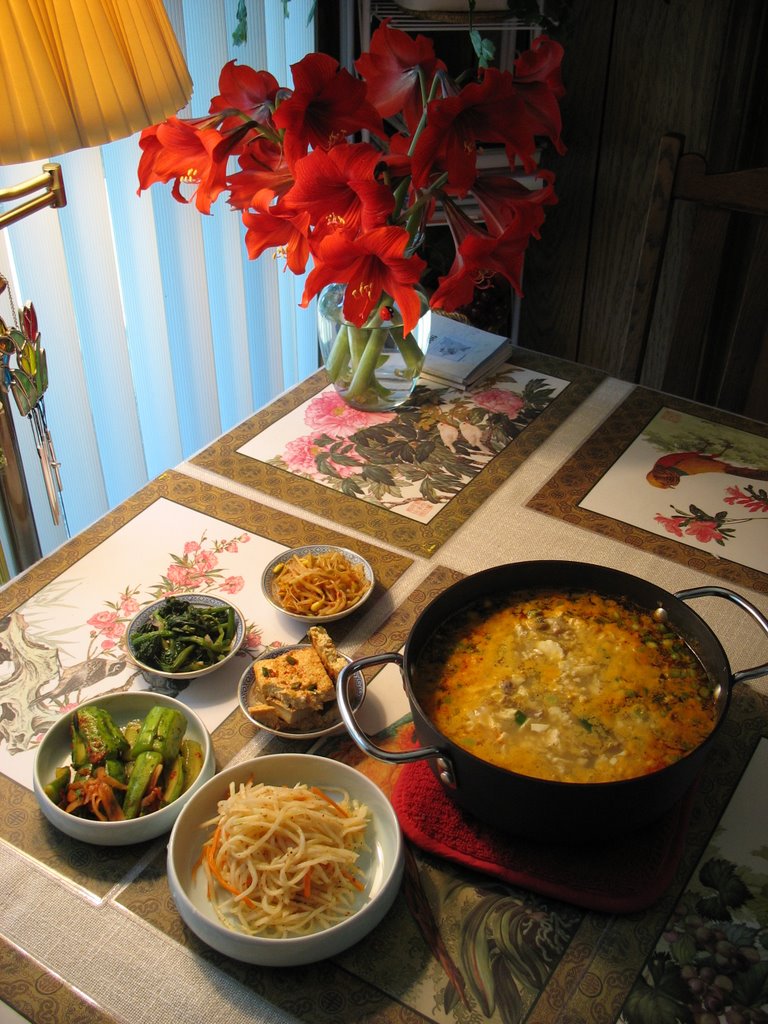 (This photo is not from the restaurant, but from my mom's house, when she made some for us when we visited her a few months ago....gives you an idea of the UN-subtle coloring of Korean cuisine...)
It's hard to spell out Korean food in English and not have it sound like a scary disease when you read it outloud..
Perhaps the phonetic unfriendliness of the menu is one reason why Korean food hasn't become as popular as Chinese and Thai food...Some examples of the scary spelling of other Korean staples are:
"jab-chae"
"bool-koki"
"bi-bim-bob"
"kal-bee"
"kkak-doo-gie"
"ddok"
"o-jing-o"
"kimchee" (probably the most familiar word)
So, yeah, if you don't know what those things mean, I can perfectly understand why you would be afraid to order anything!
But other Asian restaurants also have their fair share of delightful spellings...
A couple of my favorites are: "crab delighted"--yeah, sounds like fun!
and: "wanton soup"--watch your morals as you slurp there...
And that brings me to one of the joys in life for my wife and me: Engrish.
'Engrish' is that special brand of fractured English that appears in all manner of printed form in East Asia, on public signs, t-shirts, advertisements, and readily available on our side of the Pacific--on packages of exported food products.
So after dinner, we drove across (yes--drove across; one cannot walk across the street in suburbia, alas...) the road to a huge new grocery store: "H-mart." The business, housed in what was formerly a mainstream American mega-grocery-store, is an Asian-foodie's dream: cheap, exotic produce, fresh live fish, and yes--full of Engrish-labeled products. I love Federal Way's international strip-mall-ambiance: I can go to Barnes and Noble and then go to a supermarket that makes me feel as if I were in downtown Seoul. (As for the name "Federal Way," well...I don't love that name so much--who came up with that name for a town? I mean, for a road maybe, but for an incorporated city? come on--where was the imagination? Well, if you say it the Korean way--hwehdeuroulwehee--it sounds kind of exotic, eh?)
Among our purchases were a couple of candy items. I just had to scan them and so I submit them to you now:
These chocolates are from Japan:
"Couple Chocolate"...
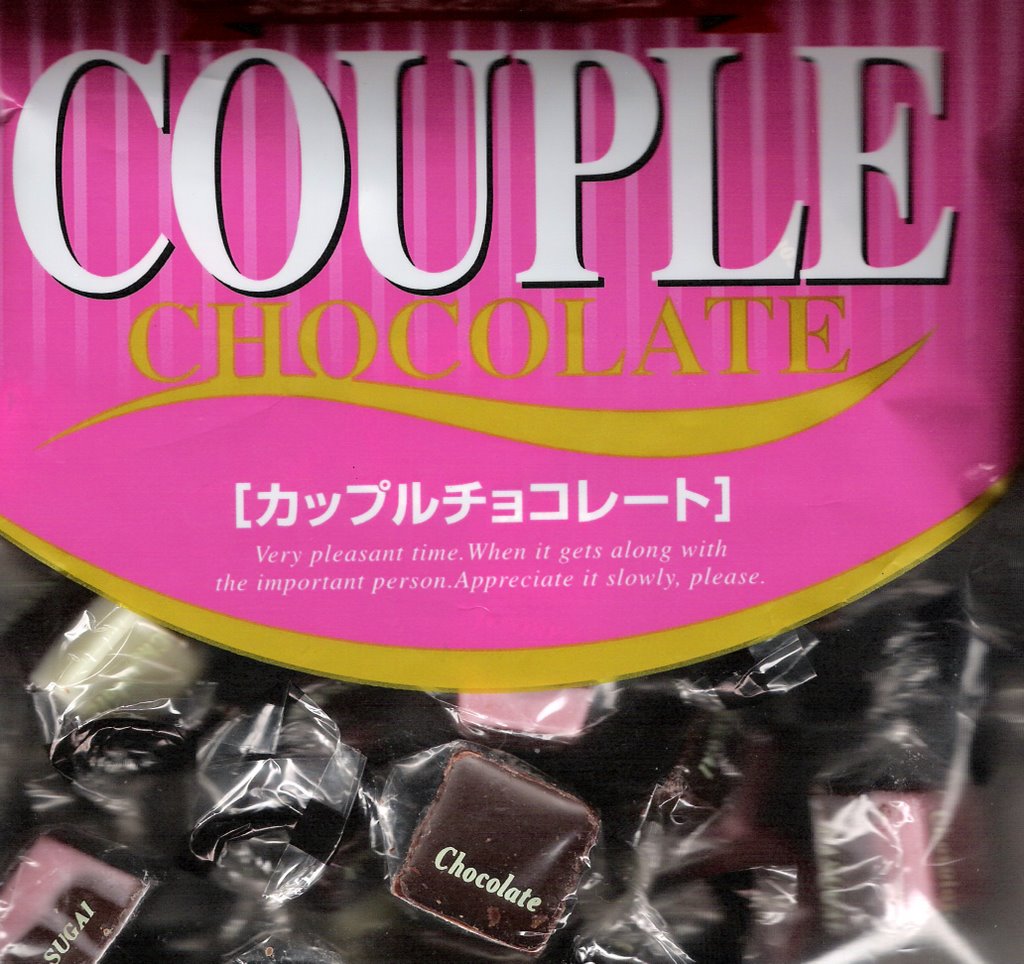
In case you are having a hard time reading the small print, I'll write it out here:
"Very pleasant time.
When it gets along with the
important person.
Appreciate it slowly, please."
I guess the candy manuracturers wanted to give some relationship advice...
And now, from Korea, are some walnut candies:
"A Walnut Village"

Again, I'll retype the small print:
"So long as the world exists,
the most beautiful and most
profound taste we can
experience is the
joeun candy."
Yeah...it takes a village to understand
that, eh?
( I just found out that it's possible on this website
to click on a picture to see a bigger version,
so go ahead if you want to read the small print...)
A couple more things that caught our eye tonight we didn't buy, so I couldn't scan them...
but I have to mention them:
"HotMate" spicy rice crackers...(only for married folks?)
"SexyMild" mauve-colored cosmetic face powder...(no, wouldn't want to be 'wild,' just 'mild'...)
In today's increasingly globalized world, why learn Spanish, French, or Mandarin?
Everyone should speak Engrish; the world would be a much punnier prace...
While I'm up...
...I guess I'll post a few more photos.
I'll balance out the rainbow-vibes with some volcanic views...
And since one of the reasons for this blog is to process Before- and After-Nicaragua thoughts, I should include some landscapes of our Nica-life and our post-Nica-life...
So, here's a view of San Cristóbal, the tallest active volcano in Nicaragua, about 30 miles to the NW of León:
 I happened to have my camera with me while running errands downtown one day. (6 mar 2006) It was a clear day, so I thought I'd take a few minutes and go up the steps of the cathedral bell tower to enjoy the view, and while I was up there, ash began belching out of the mountain. It only lasted for about 15 minutes, and then it calmed down...
A couple of weeks later, I saw it erupt again, but this time, just steam:

León is a safe distance away from San Cristóbal...but nearby is Cerro Negro:
 It's appropriately named, no? "Black Hill"...in 1850, this was flat land--dry tropical forest and savannah...but in that year, black sand and ash began to burp out of the ground...and today it's a 1500'-tall pile of hot blackness. Weird to think of the town being older than the volcano, eh? (One of the craters is below, taken Jan 2006) Several times since 1850, Cerro Negro has blanketed León with tons of ash and sand...
 ...which is ironic, since the whole point of locating León in its current location was to get away from such threats. Around 1520, the Spanish founded the original city of León about 30 miles to the SE, on the shores of Lake Managua, in the shadow of the Momotombo volcano. (below, along with its 'baby,' the volcanic island of Momotombito) About a hundred years later, the city was destroyed by earthquakes and then covered by volcanic debris. (The ruins were unearthed only a couple of decades ago.) And so León was relocated to its current site.
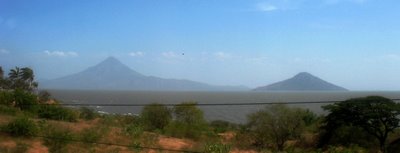 As recently as the mid-1990's, Cerro Negro has erupted, and Momotombo still has enough geothermal energy underneath it to produce 10 percent of Nicaragua's electricity...yep, Nicaragua--it's hot...
And now, in our post-Nica life, my wife and I can look out at a visually more placid evening scene:
 But the towns near the base of Mt. Rainier regularly have evacuation drills. Rainier is not likely to erupt à la Nicaraguan volcanoes, but if it were to heat up suddenly, its glaciated slopes would melt, potentially causing miiles of catastrophic rivers of mud to flow--"lahars", they're called...
Good-ol' terra firma...
...I guess I'll post a few more photos.
I'll balance out the rainbow-vibes with some volcanic views...
And since one of the reasons for this blog is to process Before- and After-Nicaragua thoughts, I should include some landscapes of our Nica-life and our post-Nica-life...
So, here's a view of San Cristóbal, the tallest active volcano in Nicaragua, about 30 miles to the NW of León:
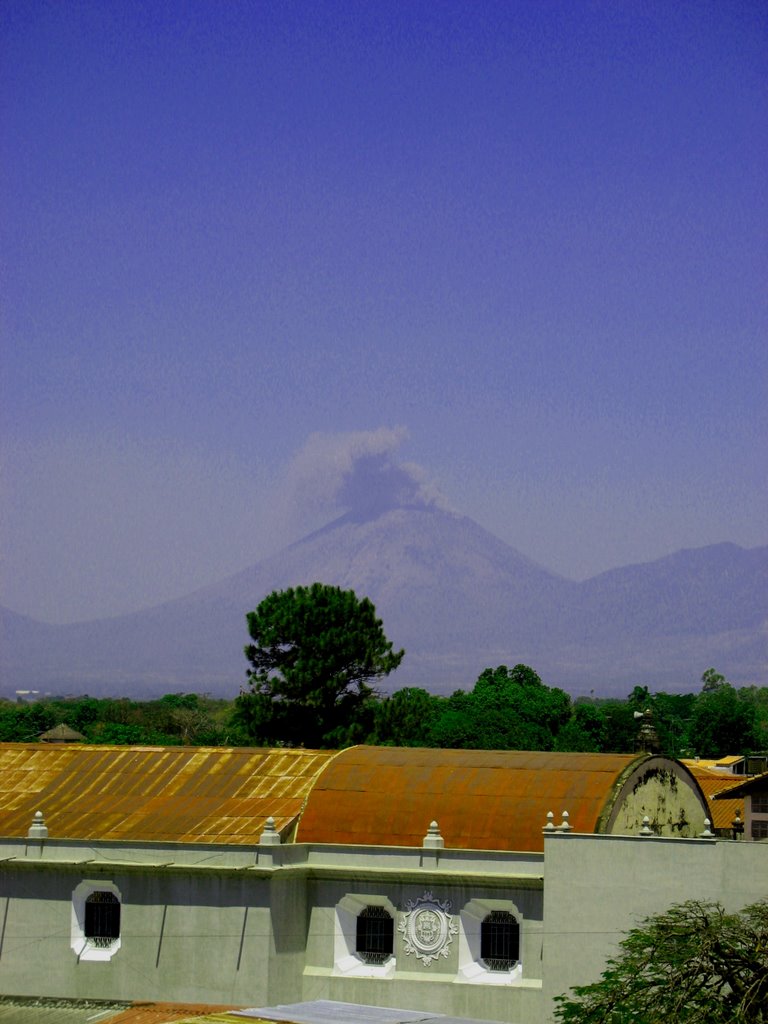 I happened to have my camera with me while running errands downtown one day. (6 mar 2006) It was a clear day, so I thought I'd take a few minutes and go up the steps of the cathedral bell tower to enjoy the view, and while I was up there, ash began belching out of the mountain. It only lasted for about 15 minutes, and then it calmed down...
A couple of weeks later, I saw it erupt again, but this time, just steam:
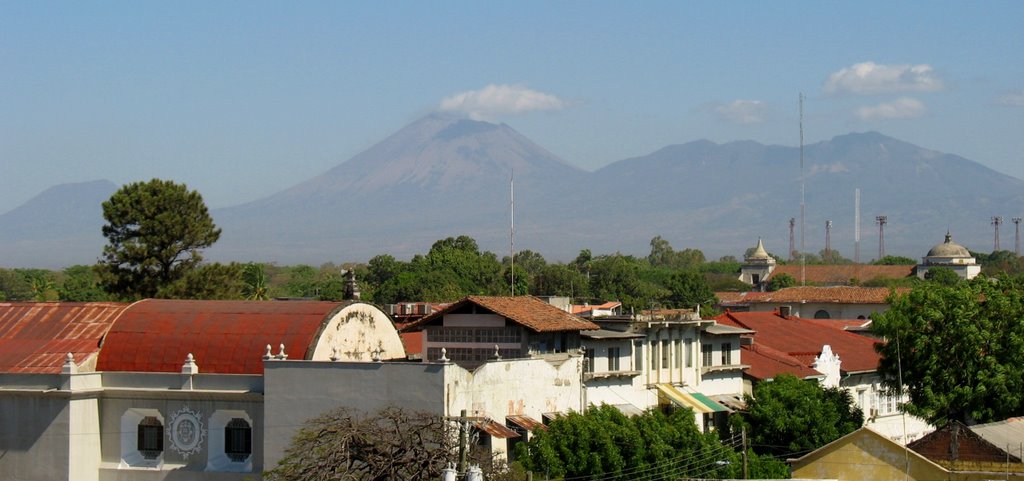
León is a safe distance away from San Cristóbal...but nearby is Cerro Negro:
 It's appropriately named, no? "Black Hill"...in 1850, this was flat land--dry tropical forest and savannah...but in that year, black sand and ash began to burp out of the ground...and today it's a 1500'-tall pile of hot blackness. Weird to think of the town being older than the volcano, eh? (One of the craters is below, taken Jan 2006) Several times since 1850, Cerro Negro has blanketed León with tons of ash and sand...
 ...which is ironic, since the whole point of locating León in its current location was to get away from such threats. Around 1520, the Spanish founded the original city of León about 30 miles to the SE, on the shores of Lake Managua, in the shadow of the Momotombo volcano. (below, along with its 'baby,' the volcanic island of Momotombito) About a hundred years later, the city was destroyed by earthquakes and then covered by volcanic debris. (The ruins were unearthed only a couple of decades ago.) And so León was relocated to its current site.
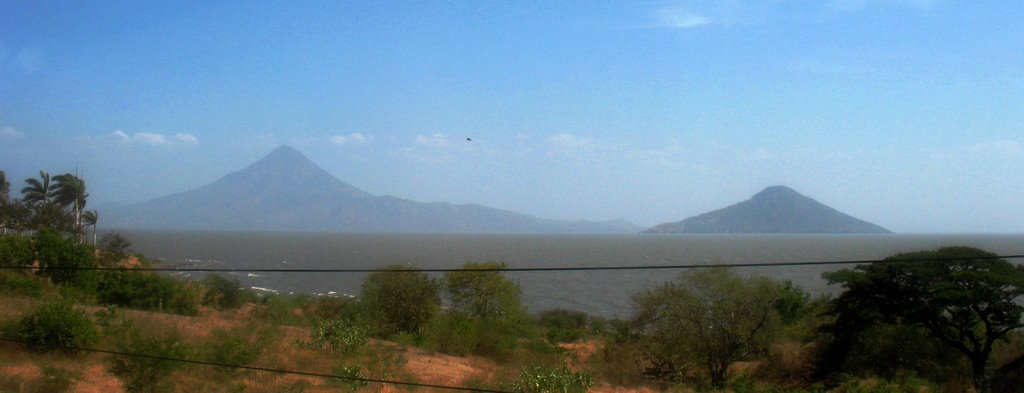 As recently as the mid-1990's, Cerro Negro has erupted, and Momotombo still has enough geothermal energy underneath it to produce 10 percent of Nicaragua's electricity...yep, Nicaragua--it's hot...
And now, in our post-Nica life, my wife and I can look out at a visually more placid evening scene:
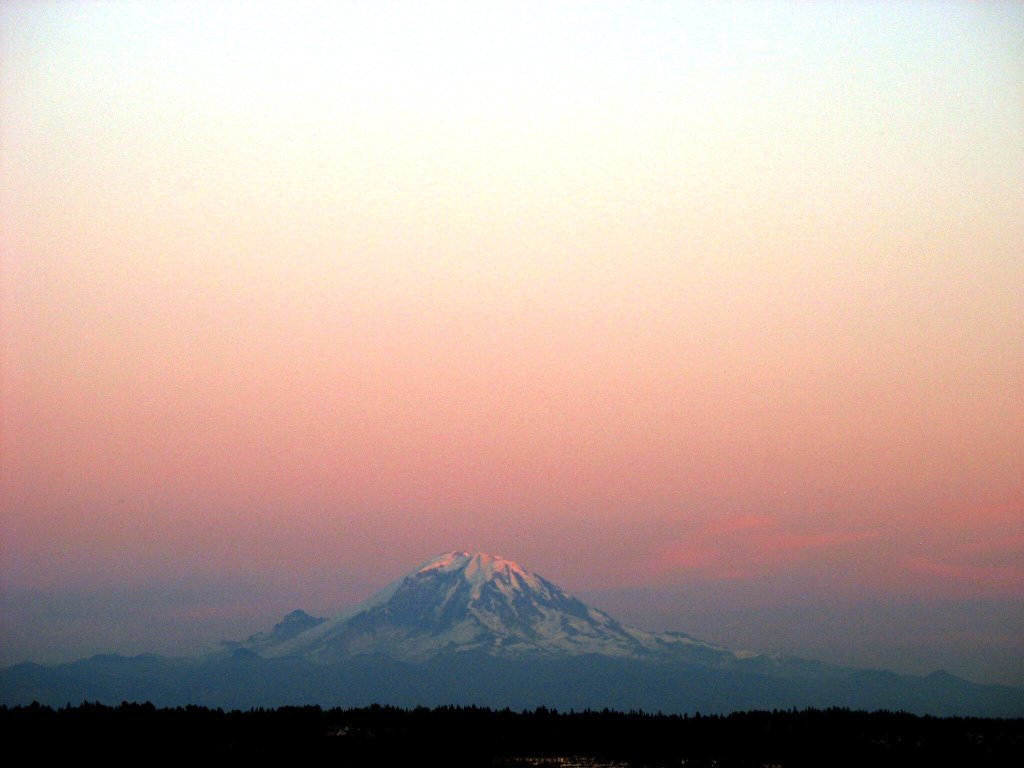 But the towns near the base of Mt. Rainier regularly have evacuation drills. Rainier is not likely to erupt à la Nicaraguan volcanoes, but if it were to heat up suddenly, its glaciated slopes would melt, potentially causing miiles of catastrophic rivers of mud to flow--"lahars", they're called...
Good-ol' terra firma...
September is a month...
...of rainbows.
(Don't worry...Reallly, this is not going to be a corny posting, full of saccharine platitudes à la Thomas Kinkaid...read on...)
I've been home all day and evening with a nasty end-of-summer cold. Not enough energy to go out, but too listless to sleep. Dayquil had my head in a fog all day, and Nyquil hasn't kicked in yet...
Stuck here, then, I finally got around to reorganizing some things, including dealing with a pile of photos in the corner of the spare room--old pictures from my pre-digital days that I've wanted to scan into the computer for months now...
Looking at all these images, I came across three photos of rainbows, all taken coincidentally in the month of September, but in very different places.
Like most children, I guess, I was always fascinated by rainbows--how could something so substantial-looking be so ephemeral? Growing up in in the rainy climate of northern Germany, so many childhood days were punctuated by the bands of color in the sky...and then when we lived in Arizona, the summer monsoons that would march across the high desert would leave behind them impossible combinations of rainbows and lightning over the distant mountains...
Occasionally during evening commutes here in Seattle, I've actually been thankful for rain-induced gridlock, allowing me to safely stare at a rainbow off to the east as the sun peeks out from a suddenly clear western sky...
But so much better than glimpsing a rainbow while driving is to be at home and to look out the window and see the luminous arc of color...and to have a camera.
Despite Seattle's reputation of being a place where life is lived under everpresent grey, the truth is that summers here are mostly DRY. The grass turns brown under a cloudless sky; mediterranean flora flourishes. This year was the driest summer in years--over 90 days with no significant rainfall. But, last week fall arrived, and the rain fell...
and one evening, as the sun fought back, we got a glimpse of this double-rainbow from our balcony:
 (Who knew that Renton could be so scenic?)
That view reminded me of an evening years ago, at the beginning of my year in France. I had the surprise of coming home from the grocery-store, and looking out my window to this view:
 I couldn't have asked for a more perfect moment to take a photo of the Paris skyline. There was literally gold at the end of the rainbow--the golden-domed roof of the Église des Invalides, where Napoleon I lies buried. (Emperor worship is alive and well, even in staunchly secular and republican France) The following spring, when the leaves grew back, the view of the Eiffel tower was obscured by the foliage. And now, the building where I lived has been torn down, I've heard...So this particular view, hélas, is no more...
Well, that was way back in the twentieth century...
Closer to now--September of last year.
In western Nicaragua, as in much of Central America, the rainy season (what they call 'winter') lasts from May to November. Usually that means sunny hot mornings that produce towering clouds that explode in afternoon downpours, and then after the brief cool respite, a steamy evening...But one morning we awoke to the loud drumming of rain on our tin roof...As we finished breakfast, the rain let up, and then voilà:
 The rainbow conveniently ends, as you can see, in a treetop full of red llama del bosque blossoms...No pot-o'-gold in Nicaragua, but plenty of flowers in the wet season...
Who knew that Day- and Ny-quil could inspire one to post rainbows?
A coincidence of the calendar, that all these photos were taken in September...
...which ends today.
...of rainbows.
(Don't worry...Reallly, this is not going to be a corny posting, full of saccharine platitudes à la Thomas Kinkaid...read on...)
I've been home all day and evening with a nasty end-of-summer cold. Not enough energy to go out, but too listless to sleep. Dayquil had my head in a fog all day, and Nyquil hasn't kicked in yet...
Stuck here, then, I finally got around to reorganizing some things, including dealing with a pile of photos in the corner of the spare room--old pictures from my pre-digital days that I've wanted to scan into the computer for months now...
Looking at all these images, I came across three photos of rainbows, all taken coincidentally in the month of September, but in very different places.
Like most children, I guess, I was always fascinated by rainbows--how could something so substantial-looking be so ephemeral? Growing up in in the rainy climate of northern Germany, so many childhood days were punctuated by the bands of color in the sky...and then when we lived in Arizona, the summer monsoons that would march across the high desert would leave behind them impossible combinations of rainbows and lightning over the distant mountains...
Occasionally during evening commutes here in Seattle, I've actually been thankful for rain-induced gridlock, allowing me to safely stare at a rainbow off to the east as the sun peeks out from a suddenly clear western sky...
But so much better than glimpsing a rainbow while driving is to be at home and to look out the window and see the luminous arc of color...and to have a camera.
Despite Seattle's reputation of being a place where life is lived under everpresent grey, the truth is that summers here are mostly DRY. The grass turns brown under a cloudless sky; mediterranean flora flourishes. This year was the driest summer in years--over 90 days with no significant rainfall. But, last week fall arrived, and the rain fell...
and one evening, as the sun fought back, we got a glimpse of this double-rainbow from our balcony:
 (Who knew that Renton could be so scenic?)
That view reminded me of an evening years ago, at the beginning of my year in France. I had the surprise of coming home from the grocery-store, and looking out my window to this view:
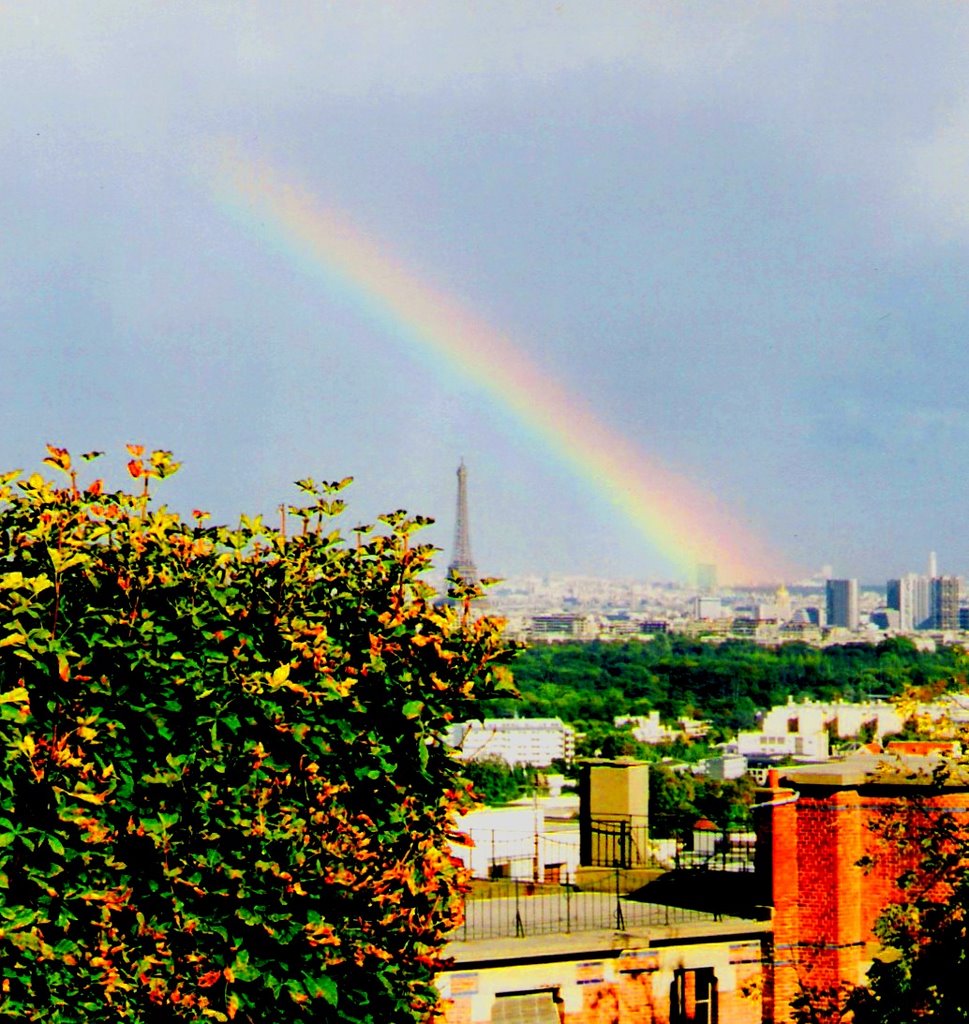 I couldn't have asked for a more perfect moment to take a photo of the Paris skyline. There was literally gold at the end of the rainbow--the golden-domed roof of the Église des Invalides, where Napoleon I lies buried. (Emperor worship is alive and well, even in staunchly secular and republican France) The following spring, when the leaves grew back, the view of the Eiffel tower was obscured by the foliage. And now, the building where I lived has been torn down, I've heard...So this particular view, hélas, is no more...
Well, that was way back in the twentieth century...
Closer to now--September of last year.
In western Nicaragua, as in much of Central America, the rainy season (what they call 'winter') lasts from May to November. Usually that means sunny hot mornings that produce towering clouds that explode in afternoon downpours, and then after the brief cool respite, a steamy evening...But one morning we awoke to the loud drumming of rain on our tin roof...As we finished breakfast, the rain let up, and then voilà:
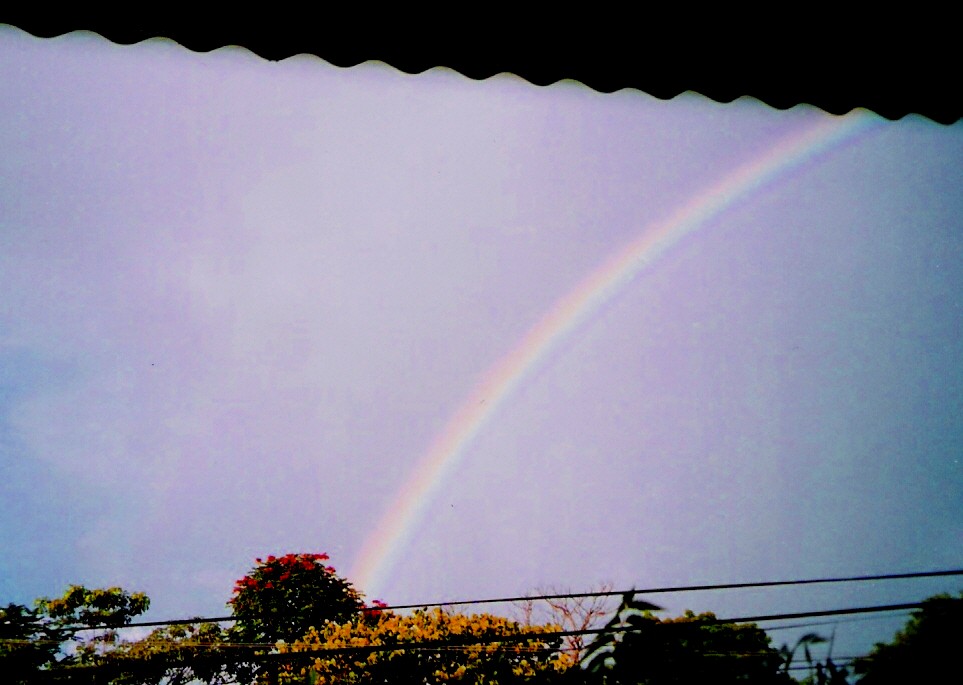 The rainbow conveniently ends, as you can see, in a treetop full of red llama del bosque blossoms...No pot-o'-gold in Nicaragua, but plenty of flowers in the wet season...
Who knew that Day- and Ny-quil could inspire one to post rainbows?
A coincidence of the calendar, that all these photos were taken in September...
...which ends today.
Subscribe to:
Posts (Atom)